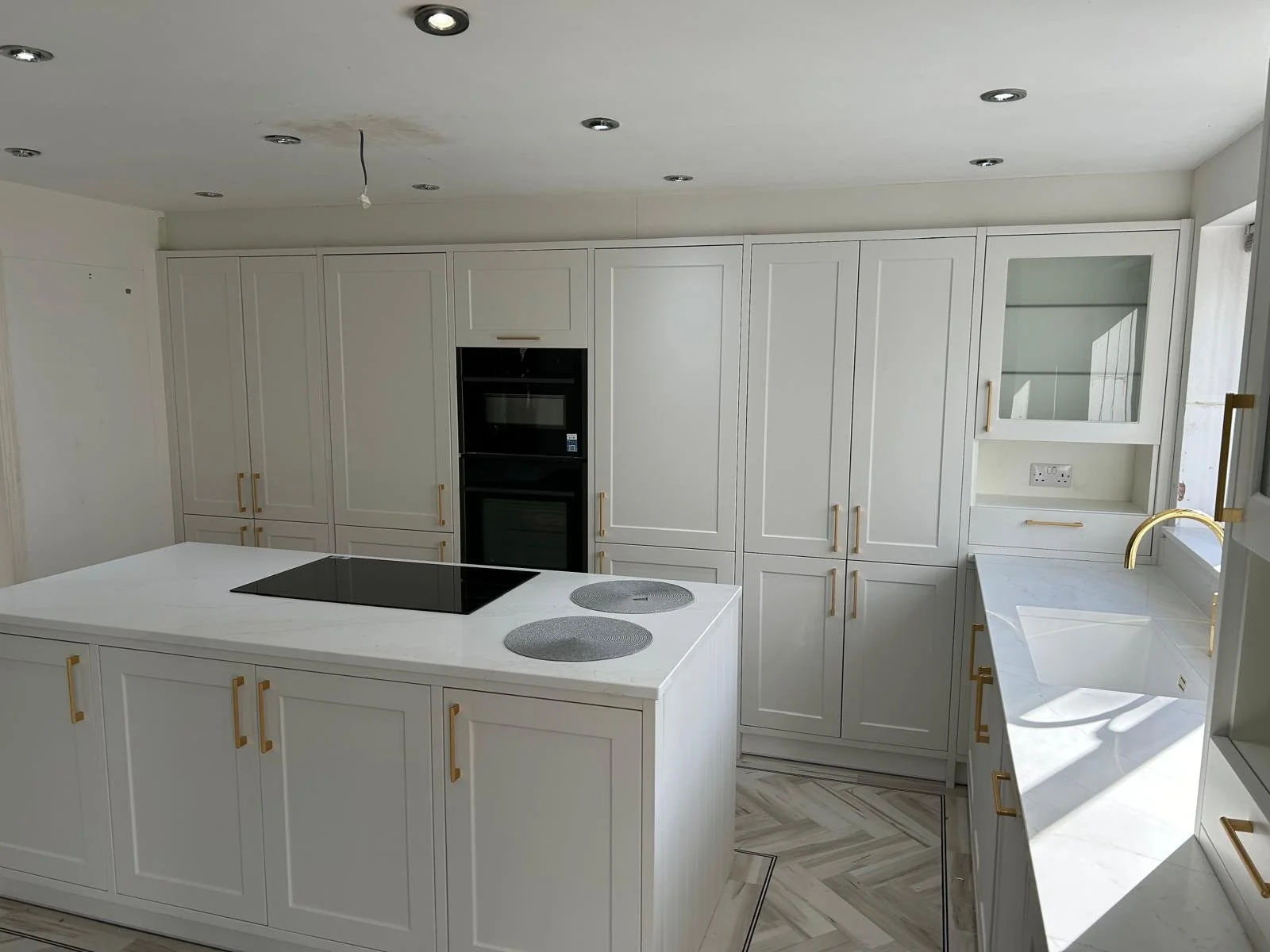
One of the most common questions homeowners ask before starting a new kitchen is how long the renovation will take.
There isn't one fixed answer because the timescale depends on the amount of work involved. A straightforward kitchen installation into a prepared room can be completed relatively quickly, while a full renovation involving removal, plumbing, electrics, plastering, flooring and finishing works will naturally take longer.
How long does a typical kitchen renovation take?
For many projects, the main installation stage may take several days, but a full kitchen renovation can often take around one to three weeks depending on the scope of work.
Larger or more complex projects may take longer, particularly where structural changes, extensive preparation work or specialist worktops are involved.
The overall programme is usually made up of several different stages rather than one continuous installation.
What happens before the new kitchen is fitted?
Before installation begins, the existing kitchen may need to be removed and the room prepared.
This can include:
Removal of old cabinets and worktops
Plumbing alterations
Electrical works
Wall preparation
Plastering
Flooring preparation
Decorating
Making good damaged surfaces
The amount of preparation required can have a major impact on the overall timescale.
How long does kitchen installation take?
Once the room is ready, the kitchen installation itself may take anywhere from a few days to over a week depending on the size and complexity of the design.
A smaller, straightforward kitchen will normally be quicker than a larger design with more cabinets, integrated appliances, specialist storage or additional features.
Do worktops affect the timescale?
They can.
Laminate worktops can often be fitted during the main installation.
Quartz, granite and other stone worktops usually need to be templated after the base units have been installed.
The worktops are then manufactured and fitted at a later date, meaning there may be a short gap between the main kitchen installation and final completion.
What can delay a kitchen renovation?
Common causes of delays include:
Additional work discovered after the old kitchen is removed
Changes to the original design
Plumbing or electrical issues
Damaged walls or flooring
Late deliveries
Specialist worktop lead times
Additional decorating or finishing work
Good planning before the project begins can reduce the risk of unnecessary delays.
Should different trades be booked separately?
You can organise each trade individually, but this can make scheduling more complicated.
For example, the kitchen fitter may need the electrician or plumber to complete work before installation can continue.
Where several trades are required, coordinating the sequence properly can help keep the project moving and reduce unnecessary downtime.
How JPAK Property Services manages kitchen projects
JPAK Property Services coordinates kitchen renovations across Coventry, Warwickshire and surrounding areas.
Depending on the project, this can include kitchen installation alongside plumbing, electrical works, plastering, flooring, decorating and other preparation or finishing works.
By coordinating the relevant trades around the project, the aim is to give homeowners one main point of contact and a clearer overall schedule.
Planning a kitchen renovation in Coventry?
JPAK Property Services coordinates kitchen projects across Coventry and surrounding areas, including installation and the preparation and finishing works required around the kitchen.
If you're planning a new kitchen, tell us a little about your project and we'll get back to you to discuss the next steps.